Is Clinical Depression Genetic? Understanding the Role of Family History and Mental Health
Clinical depression is one of the most common mental health conditions affecting people of all ages. While awareness about mental health has grown significantly, many patients still wonder about the causes of depression — especially whether it runs in families.
A common question healthcare providers hear is: “Is clinical depression genetic?”
The answer is not simple. Research shows that genetics can influence depression risk, but depression is not caused by genes alone. Instead, depression usually develops through a combination of biological, psychological, and environmental factors.
Understanding how genetics relates to mental health can help individuals recognize risk factors, seek support early, and better understand treatment options.
What Is Clinical Depression?
Clinical depression, also called major depressive disorder (MDD), is a medical condition that affects mood, thinking patterns, and physical health. It is different from temporary sadness or emotional stress.
Depression can interfere with daily functioning, relationships, work, and overall quality of life.
Common symptoms include:
-
Persistent sadness or low mood
-
Loss of interest in activities once enjoyed
-
Fatigue or low energy
-
Sleep problems (sleeping too much or too little)
-
Appetite changes
-
Difficulty concentrating
-
Feelings of guilt or worthlessness
-
Hopelessness
-
Thoughts of self-harm
Symptoms typically last two weeks or longer and may vary in severity.
Depression is a treatable medical condition, and early support often leads to better outcomes.
Is Depression Genetic?
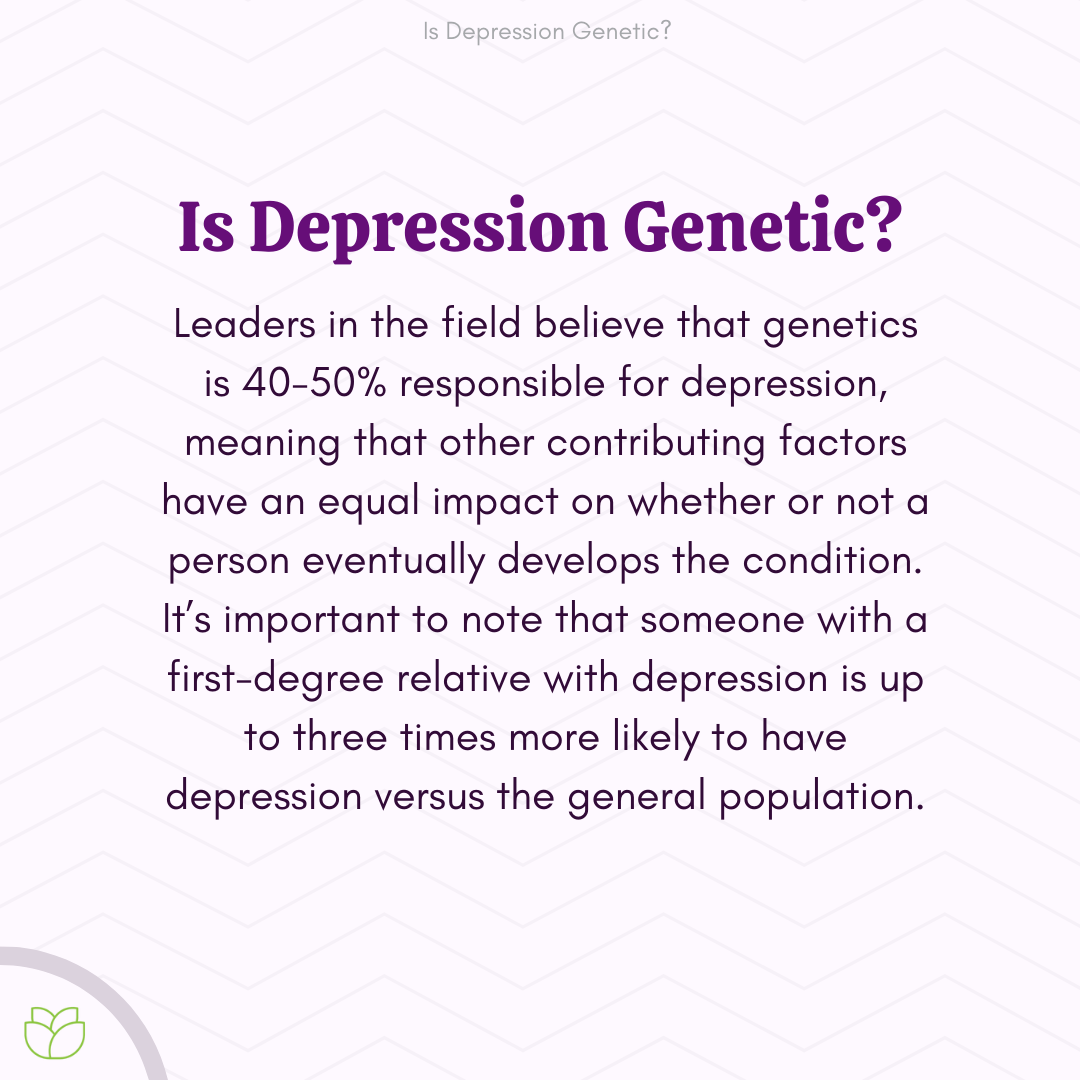
Research suggests that clinical depression can run in families, meaning genetics may increase a person’s risk of developing the condition.
However, depression is not inherited in a predictable way, and there is no single gene responsible for it.
Scientists estimate that genetic factors account for about 30–40% of depression risk, while the remaining risk is influenced by environment, life experiences, and personal health.
This means genetics can contribute to vulnerability, but they do not determine whether someone will develop depression.
Many people with a family history of depression never experience it, while others develop depression without any known family history.
How Genetics Influence Mental Health
Genes affect how the brain develops and regulates mood. Researchers believe genetics may influence:
-
Brain chemistry
-
Emotional regulation
-
Stress response systems
-
Personality traits
-
Sensitivity to environmental stress
For example, genes related to serotonin transport and regulation may influence how individuals respond to stress or emotional challenges.
Still, depression is considered a complex condition involving multiple genes interacting with environmental factors.
There is currently no genetic test that can diagnose depression.
Family History as a Risk Factor
Having a family member with depression may increase the likelihood of developing the condition.
For example:
-
Children of parents with depression may have a higher risk.
-
Risk may increase if multiple close relatives are affected.
However, families share both genetics and environment, which makes it difficult to separate inherited risk from life experiences.
Family history should be viewed as one risk factor among many, not a certainty.
Depression Is a Multifactorial Condition
Mental health experts describe depression as multifactorial, meaning several types of influences interact.
These include biological, psychological, and environmental factors.
Biological Factors
Biological influences may include:
-
Genetic predisposition
-
Hormonal changes
-
Chronic medical conditions
-
Neurological factors
-
Sleep disorders
-
Medication side effects
Changes in brain chemistry and stress-response systems can contribute to depression symptoms.
Psychological Factors
Psychological factors may increase vulnerability to depression, including:
-
Trauma
-
Anxiety disorders
-
Negative thinking patterns
-
Low self-esteem
-
Difficulty coping with stress
These factors can interact with biological vulnerability.
Environmental Factors
Environmental influences can also play a major role.
Examples include:
-
Major life changes
-
Financial stress
-
Relationship difficulties
-
Social isolation
-
Workplace challenges
-
Loss of a loved one
Often, depression develops when life stressors interact with biological vulnerability.
The Stress–Vulnerability Model
Healthcare professionals often explain depression using the stress–vulnerability model.
This model suggests that:
-
Some individuals have a genetic or biological vulnerability
-
Stressful life events can trigger depression
-
Protective factors like support systems and coping skills can reduce risk
This helps explain why two people with similar life experiences may respond differently.
Can Depression Skip Generations?
Depression does not follow a predictable inheritance pattern, so it may appear to skip generations.
In some cases:
-
Earlier generations may have been undiagnosed
-
Mental health stigma may have prevented treatment
-
Environmental conditions may have differed
Modern awareness and improved mental health care mean depression is now more likely to be recognized and treated.
Brain Chemistry and Depression
Neurotransmitters play a key role in regulating mood. These include:
-
Serotonin
-
Dopamine
-
Norepinephrine
Genetics can influence how these systems function, but lifestyle, stress, sleep, and physical health also affect brain chemistry.
This is why treatment for depression often includes multiple approaches.
Depression and Childhood Experiences
Early life experiences can shape mental health, particularly in individuals with genetic vulnerability.
Examples include:
-
Adverse childhood experiences
-
Family conflict
-
Bullying
-
Emotional neglect
-
Loss or trauma
Positive experiences, such as supportive relationships and stable environments, can help protect mental health and build resilience.
Can Depression Be Prevented?
There is no guaranteed way to prevent depression, even for individuals with family history. However, certain habits can support mental well-being and reduce risk.
These include:
-
Regular physical activity
-
Consistent sleep routines
-
Healthy nutrition
-
Social connection
-
Stress management
-
Counseling when needed
-
Routine medical care
Early awareness of mental health symptoms can make a significant difference.
When to Seek Medical Support
It may be time to speak with a healthcare provider if symptoms such as sadness, fatigue, anxiety, or loss of motivation persist.
Primary care providers often help patients by:
-
Screening for depression
-
Discussing symptoms
-
Creating treatment plans
-
Prescribing medication when appropriate
-
Referring to mental health professionals
-
Monitoring recovery
Seeking help early can improve treatment outcomes.
Treatment Options for Depression
Depression treatment is personalized based on symptoms, medical history, and patient preferences.
Common treatment approaches include:
Therapy
Psychotherapy, such as cognitive behavioral therapy (CBT), helps patients develop coping skills and healthier thinking patterns.
Medication
Antidepressants may help regulate brain chemistry and improve mood symptoms.
Lifestyle Support
Exercise, sleep improvement, and stress management often support recovery.
Ongoing Care
Regular follow-up ensures treatment remains effective.
Most patients benefit from a combination of treatments.
Reducing Mental Health Stigma
Understanding that depression involves biological and genetic factors can help reduce stigma.
Depression is not a personal weakness or failure. It is a medical condition that can affect anyone.
Open conversations about mental health encourage individuals to seek care when needed.
The Role of Primary Care in Mental Health
Primary care clinics play an important role in supporting mental health in the community.
Family doctors often serve as the first point of contact for mental health concerns. They help patients access care, coordinate treatment, and monitor progress over time.
For many patients, discussing mental health with a trusted healthcare provider is an important first step.
Supporting Someone With Depression
If depression affects a family member or friend, supportive actions can help.
These include:
-
Listening without judgment
-
Encouraging professional help
-
Offering practical assistance
-
Learning about depression
-
Being patient during recovery
Supportive relationships can make a meaningful difference in mental health outcomes.
Final Thoughts
So, is clinical depression genetic?
Genetics can increase the risk of depression, but they are only one part of a complex interaction between biology, environment, and life experiences.
Having a family history of depression does not mean someone will develop it. And if depression does occur, effective treatments are available.
Understanding mental health risk factors helps individuals seek support early, reduce stigma, and maintain overall well-being.
If you or a loved one are experiencing symptoms of depression, speaking with a healthcare provider is an important step toward support and recovery.